Friday, July 14, 2006


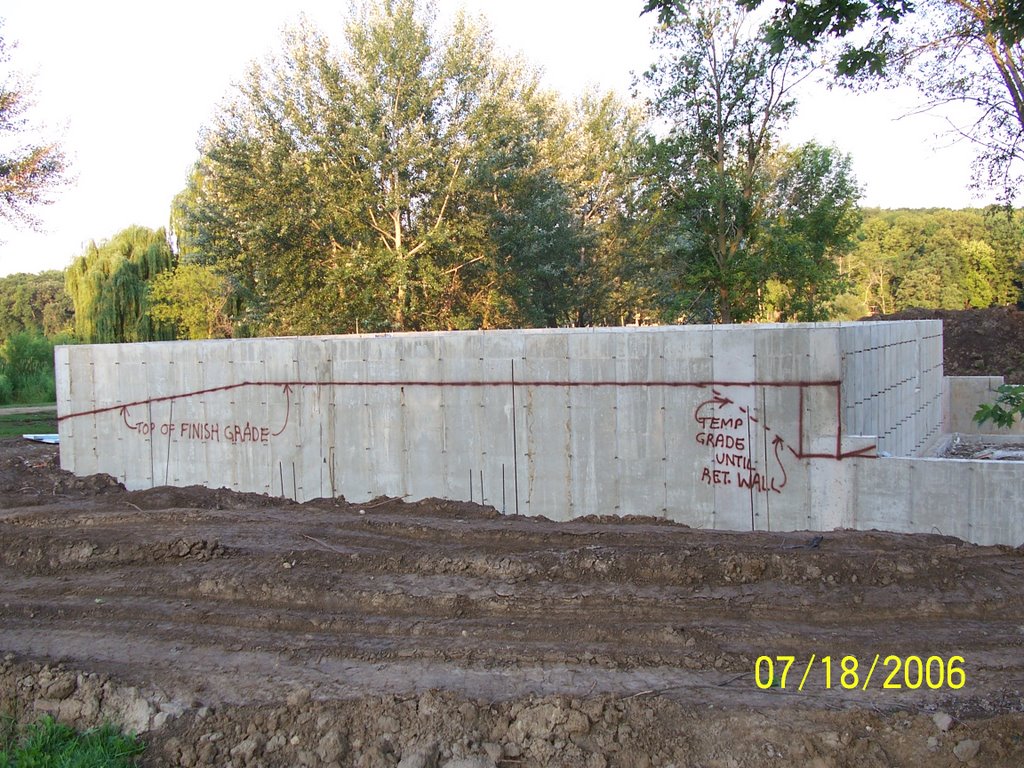
Forms come off tomorrow!


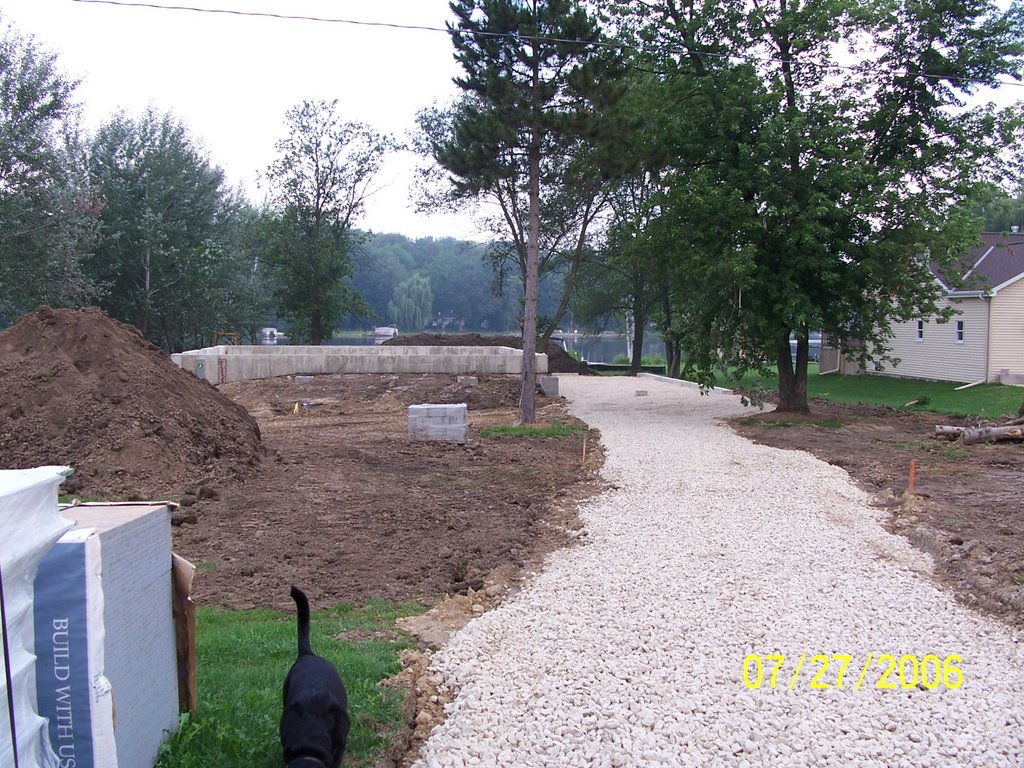
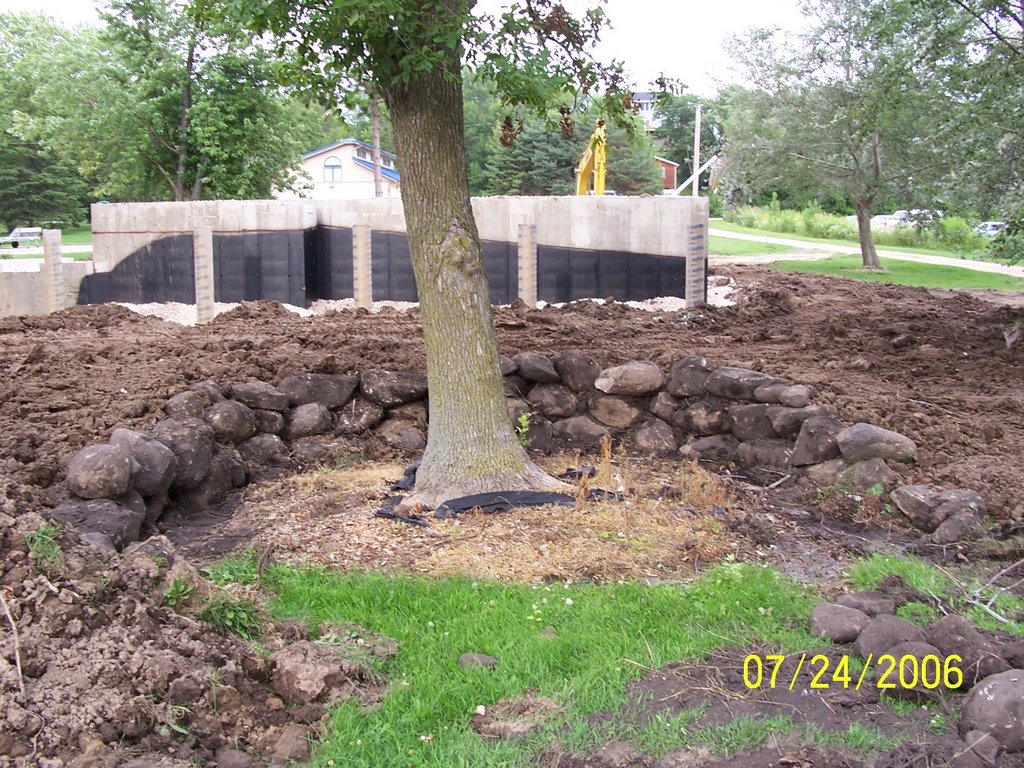
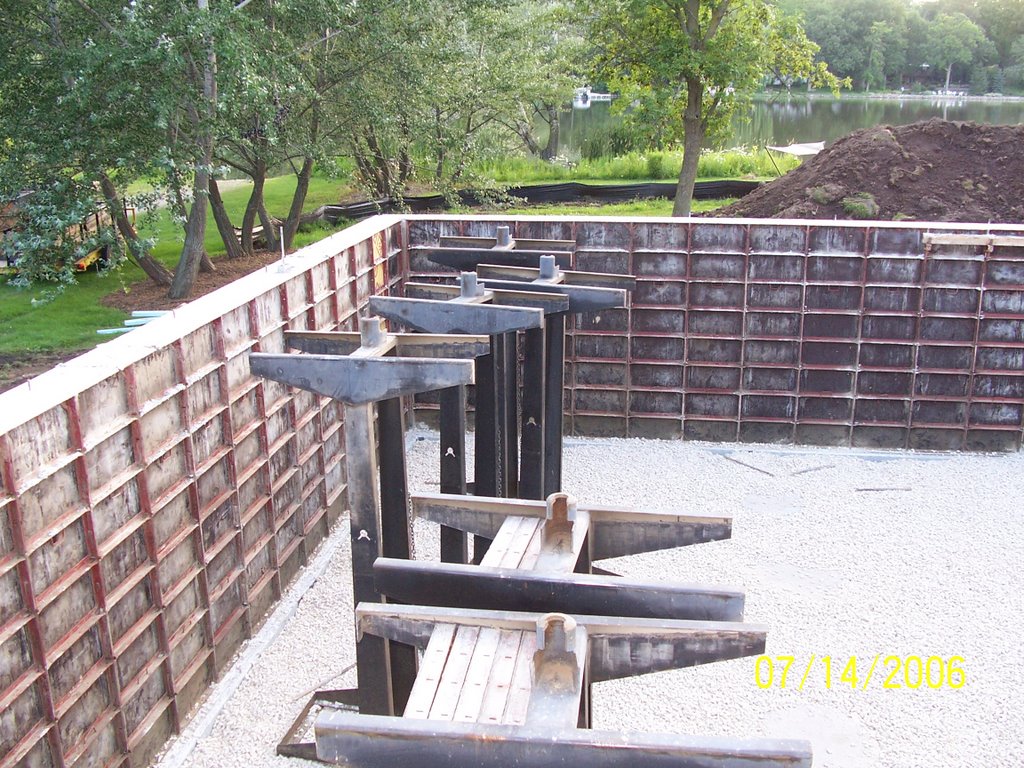
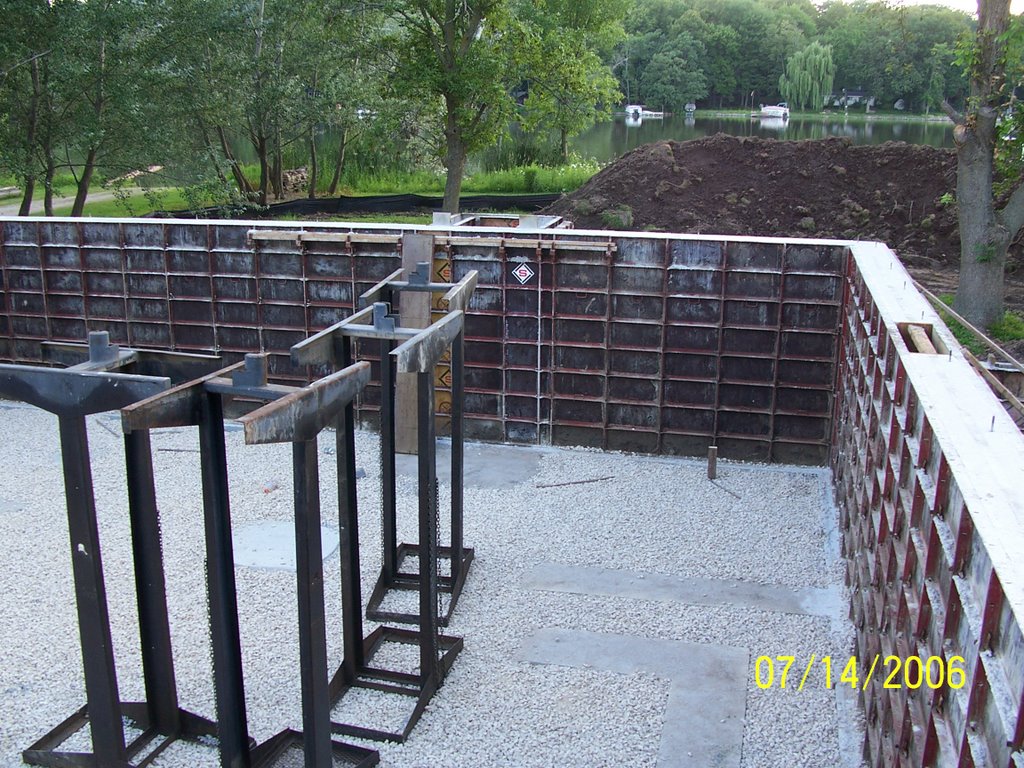
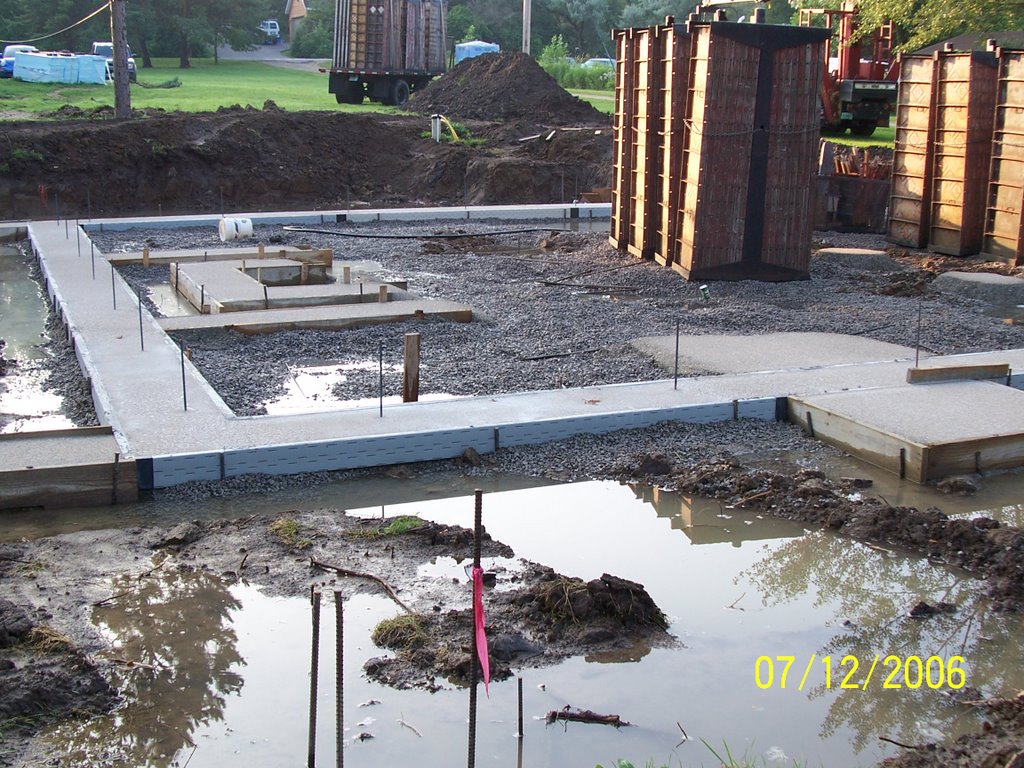
We saw this beautiful site when we came home from work!

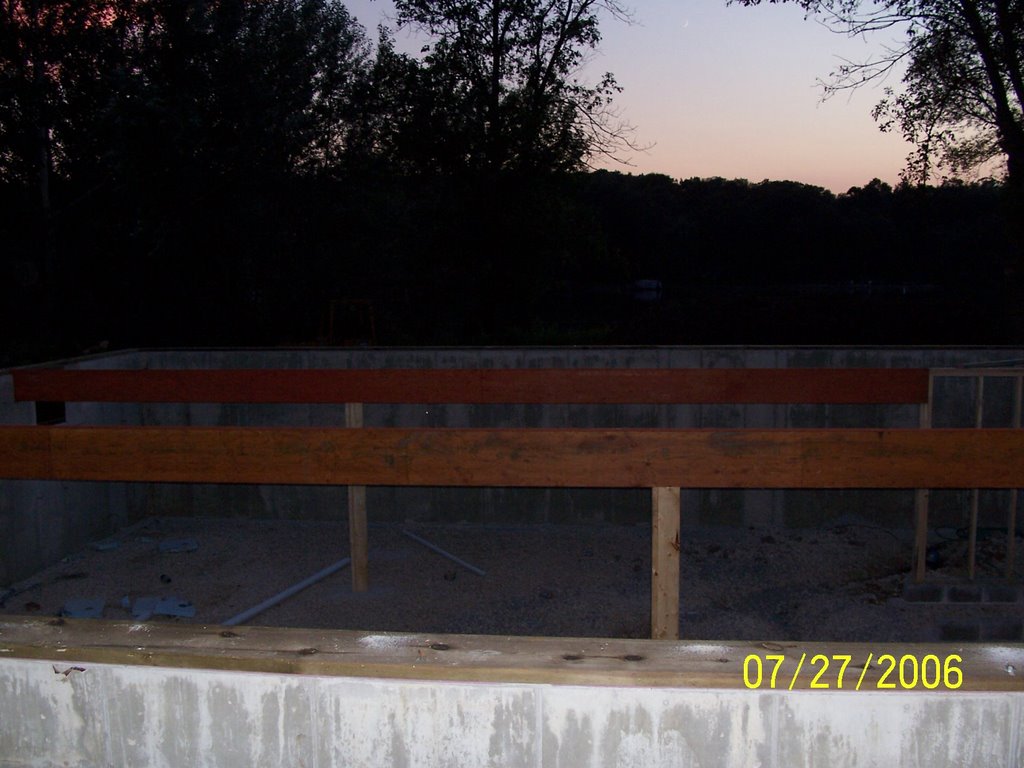
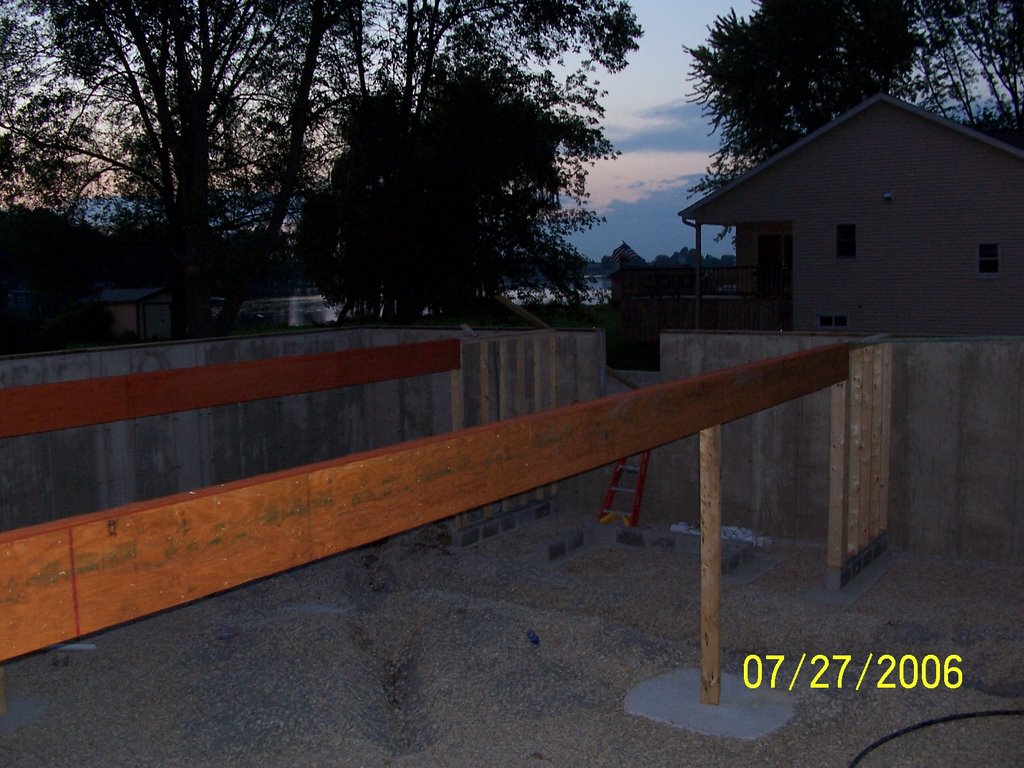
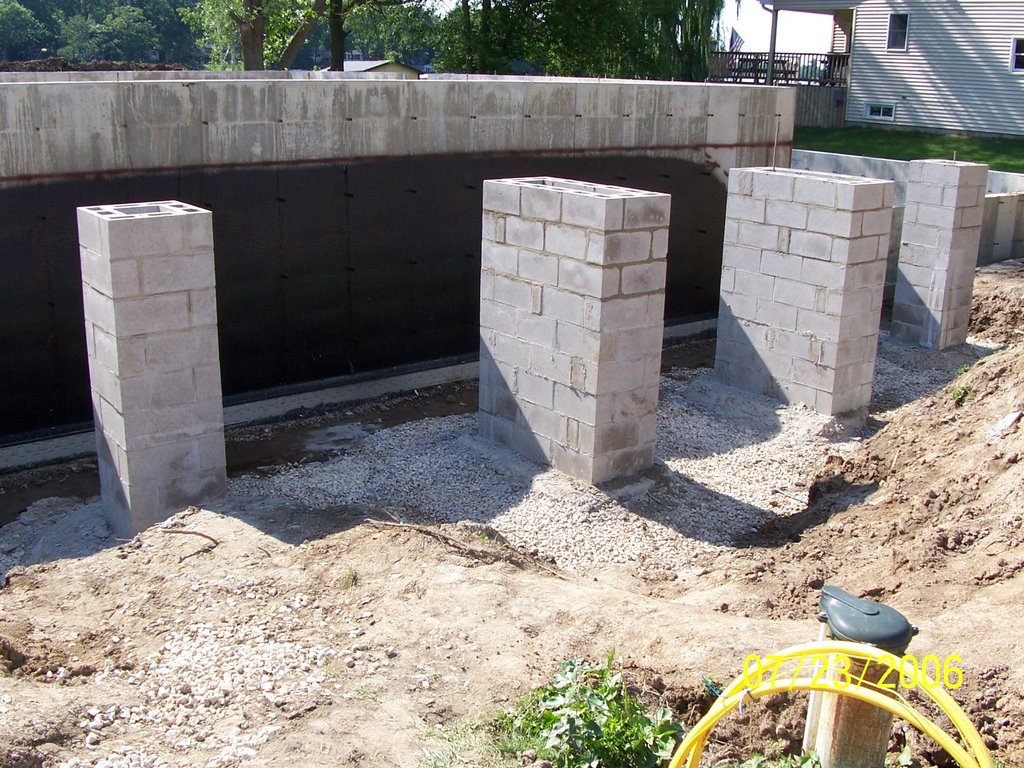
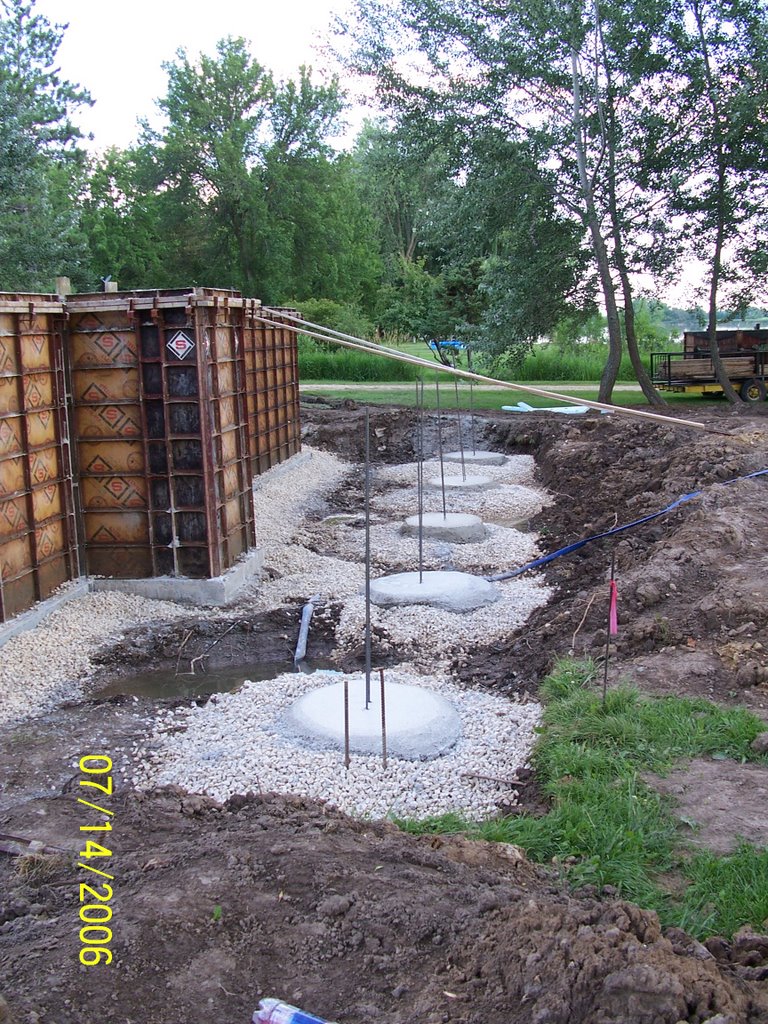
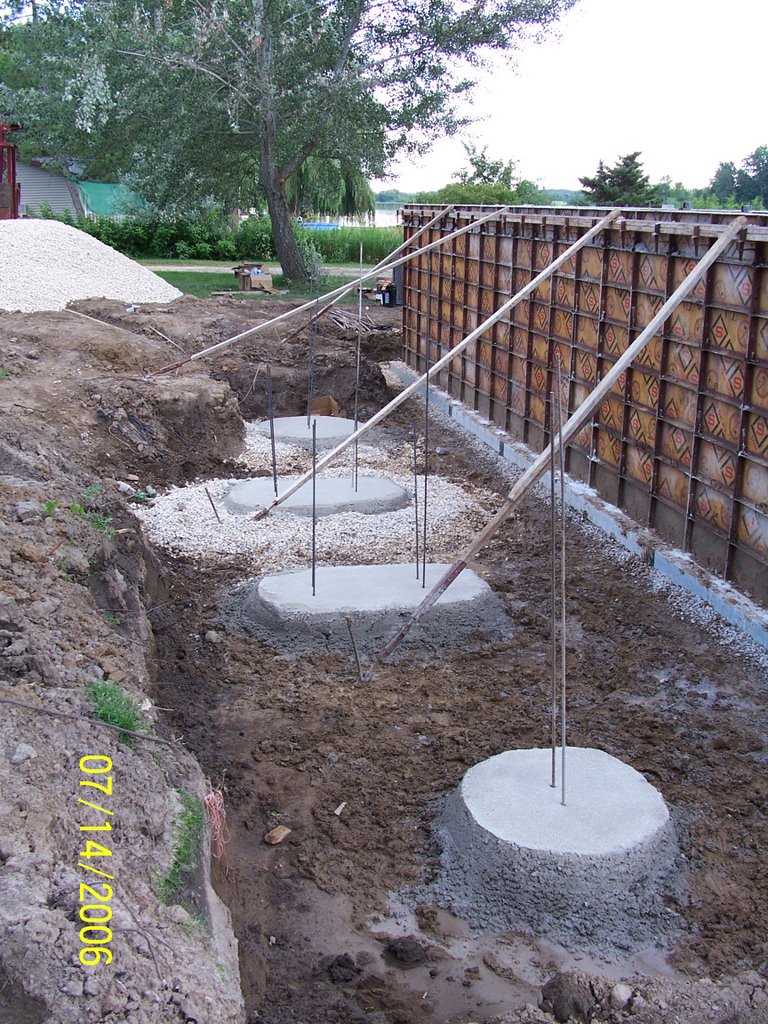
(Had to climb up on the wall for some of these pics) The little kickout on the one wall will be support a future outdoor fireplace. Those walls drop 6" down from the basement walls so we can just build the deck over the top until we are ready to build it (read - afford it). We have plans for Soapstone Tulikivi woodburner on the inside someday, too. You can sort of see the footing for that on the inside of the wall.

The original plan was to just have footings and I'd later lay block up to where we need it. A friend of mine (who laid the block for my garage foundation/frost wall) told me, "you'd be a complete idiot to not let him pour that wall for the outside fireplace" and "don't call me for that one!"

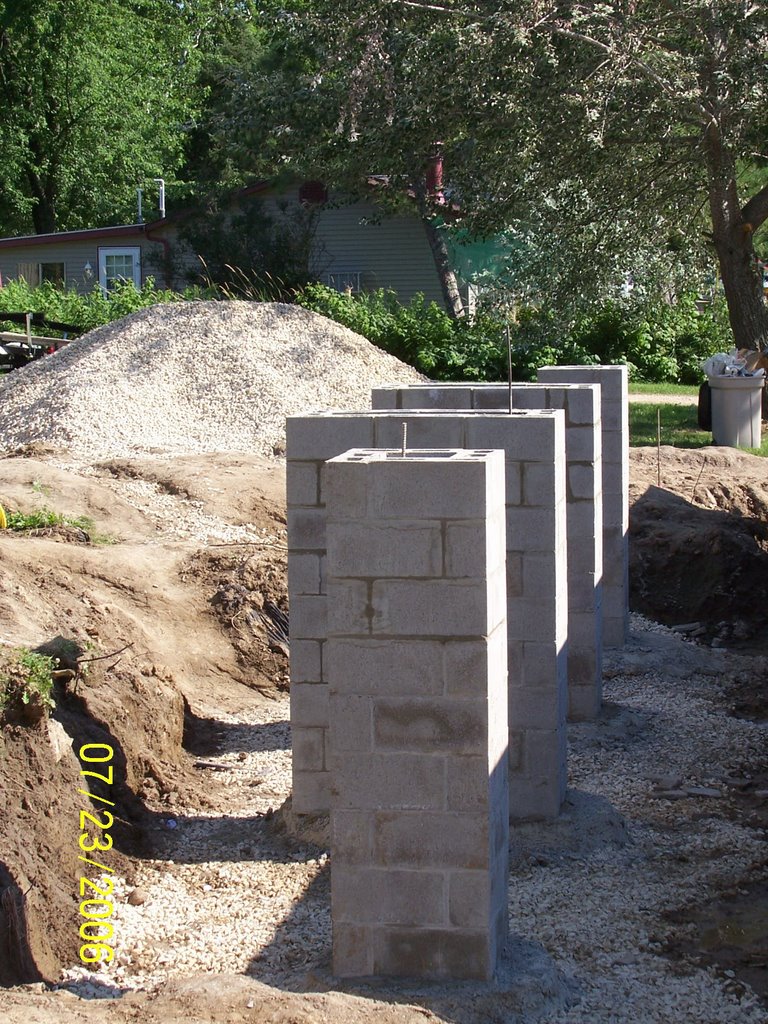
They finished off the pads for the deck sonotubes and porch piers, too.

Can't wait for tomorrow!


The Rep and The Mason


Thanks Guys!


More Pour 2


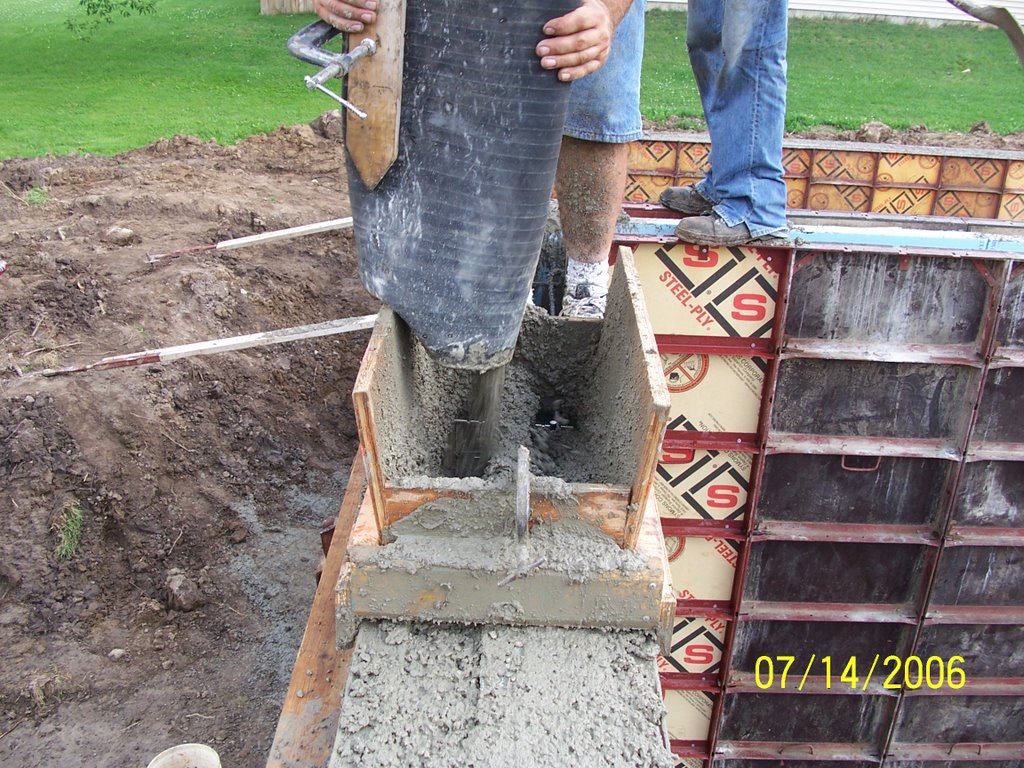
Handy T-Mass Pour Chute V1.1


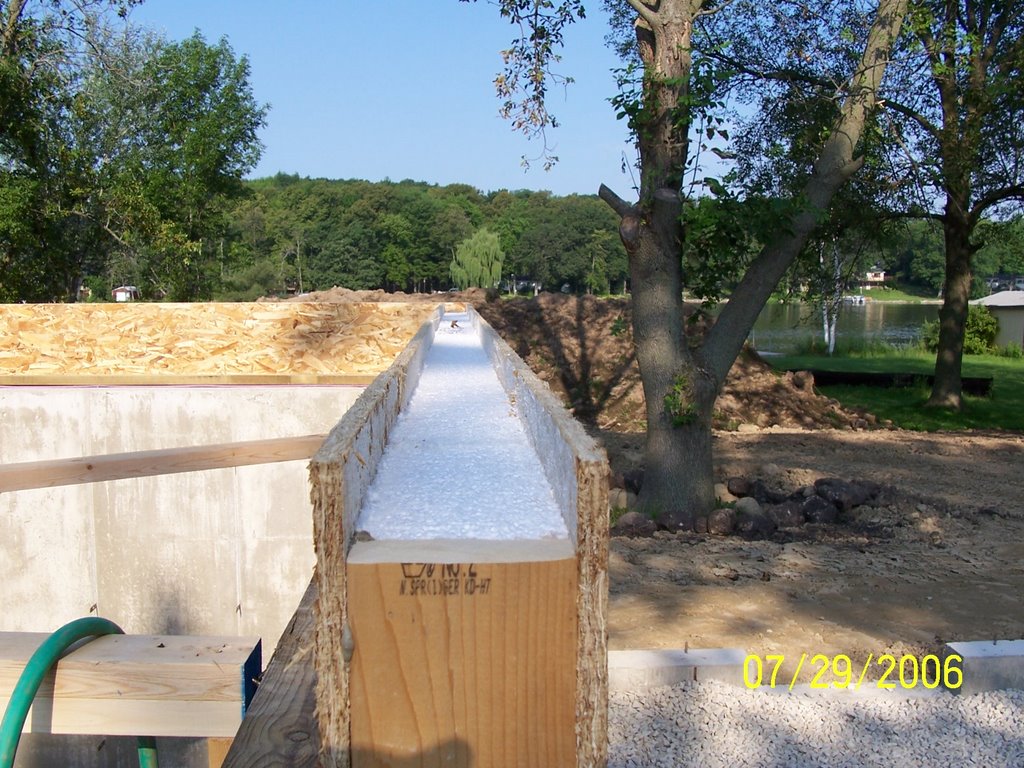
The mason had mentioned to me that on a similar job he'd done before it helped to have a chute to drag along the top of the forms. The key - according to him - was a 2" wide piece of wood running down the center of the chute. The purpose of the wood was to split the concrete so it did not damage the T-mass panel. You can sort of see it in one of the pictures.

I built this thing based on his description. I thought I'd get creative so I made it with one of the short ends extending down into the form, but with a slot cut into it that straddled the T-mass panel, too. As a joke, I painted an arrow on it to let the guy know that you had to drag the slot ahead of the fill. Well, that didn't work very well. When I tested it, the slot got hung up on the foam so I cut off. Of course, that meant the arrow had to become double ended ;-)


Minor blow out


There was a minor blow out along the North garage wall. Someone either missed one of the wedges in the tie or something knocked it loose. There is no T-mass in these walls and the guys jumped right on it.

The jammed some 2x4's on either side of the blow out; pulled the inside form; shoveled out the concrete; re-set the form; and shoveled it back in.


Pouring continued


They started in a corner near the garage - keeping the height of the concrete balanced on both sides.

After that, they moved to the garage wall.


Pouring the T-mass walls


Here we go - Putzmeister Telebelt in place at about 6am


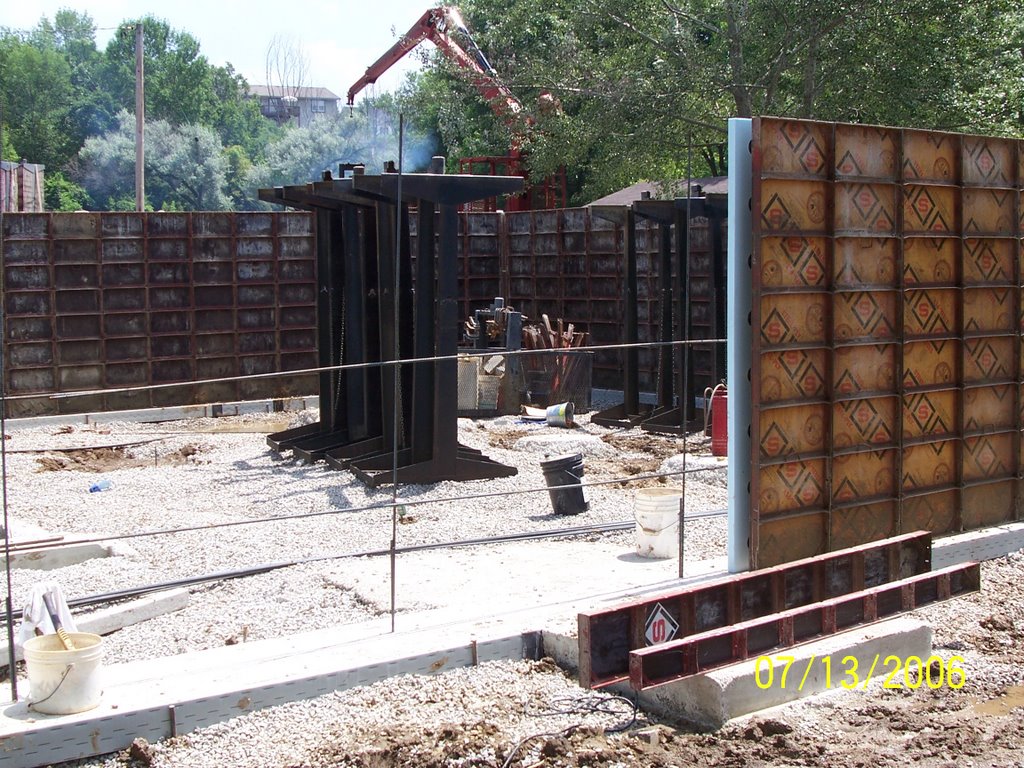
Last wall forming post


On this picture you can see where the garage wall will run from the corner. If you look back at older posts you will see the floor plans and how the garage depth is the same as the house. The difference in height is necessary because the basement stairs and inside stairs "nest" one over the other. Also, the landing on the stairs from the 1st floor to the 2nd will be at the right level for the bonus room over the garage.


Form Setting Continued


Forming the walls with T-mass


Per the spec sheet for this pour, it started with 2 runs of #4 in the footing. Not that different from a normal footing in this area. They then inserted dowels (short pieces of #4 rebar set vertically) in the footings 72"on center. Those had 8' lengths of #4 re-bar tied to them. There were two horizontal runs of #4 and then another vertical run between the verticals tied to the dowels.

In other words:
two runs of #4 in the footing
vertical #4 32"oc
a low and a mid horizontal run of #4.

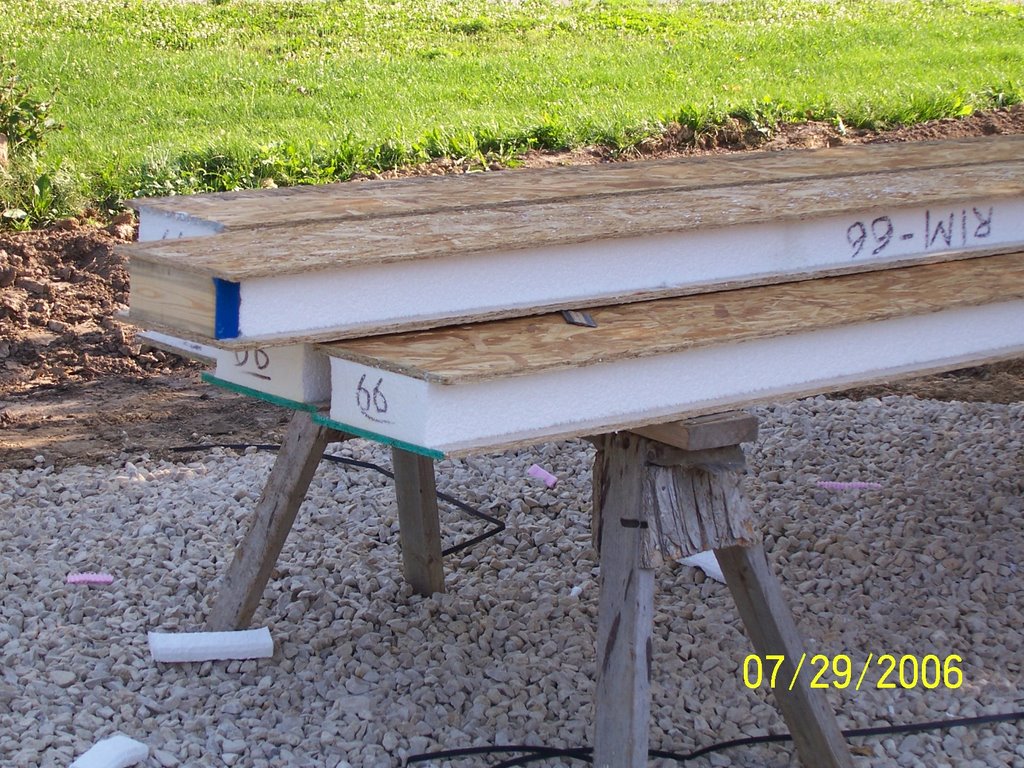
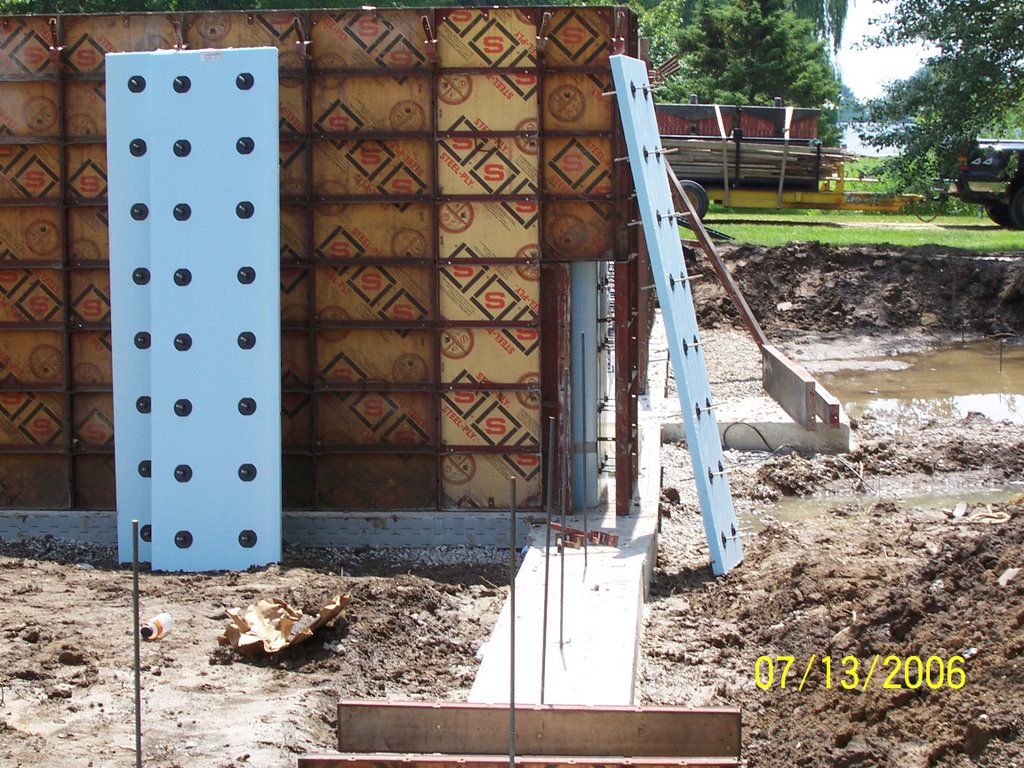
The T-mass panels were pre-cut per the form layout submitted by the mason. Those panels had the fiberglass standoffs inserted and locked into place on site - it went very quickly. The corners were precut, too. Those got folded and taped and placed so they didn't spread apart during the pour.

They started by placing some inside forms. Then the T-mass panels were placed and followed by the outside forms. The mason's commented that the standoffs (sometimes) pretty much put the outer wall right on the money for the ties to be locked in. Other times it seemed like the outer form needed a bit of extra persuasion to get the tie wedges in place. All in all it did not seem to slow them down at all.

Wednesday, July 12, 2006


Footings


Ok, granted, footings are not a thrilling step of the building process. However, I do want to create posts for most of the steps, so here it is.

I checked opposite corners with the 3-4-5 method and I pulled diagonals. Not taking into account any stretch on the tape, the footings are within 1/4" or less of "square". We are using the "Form-A-Drain" system in place of the traditional drain-tile set up.(http://foundations.certainteed.com/)

As mentioned in previous posts, this design aims at being "efficient" in many practical ways. By "efficient" we not only meant with regards to energy, but also with regards to construction methods. For example, you can see in these pics that the foundation does not have an excessive amount of corners. The challenge was not only to limit the corners, but to do so without making the design un-exciting. I will touch on points like this again as they come up.

The masons are setting the wall forms on Thursday and we hope to pour the walls on Friday.

This page is powered by Blogger. Isn't yours?